Every year, approximately 80 to 100 billion garments are produced in a system designed to move quickly. Materials are extracted, transformed into clothing pieces, worn, and eventually most are discarded in landfills, making the fashion industry a primary contributor to environmental impact. In this linear cycle, the end of a garment’s life is rarely considered at its beginning. One of the most unseen stages in this process is dyeing. Textile production is estimated to account for about 20% of global clean water pollution, largely due to chemicals released through wastewater from dyeing. What gives fabric its beauty can also leave a lasting trace on rivers and soil, making current practices impossible to sustain without considering long term consequences.
Learning from the Source
We are a slow-fashion textile label striving for a more responsible future through circular design and thoughtful materials. The challenge lies in reimagining how we dress to align with the needs of all living beings. To do this, we find vital inspiration in the practices of indigenous communities and the craftsmanship passed down through generations.
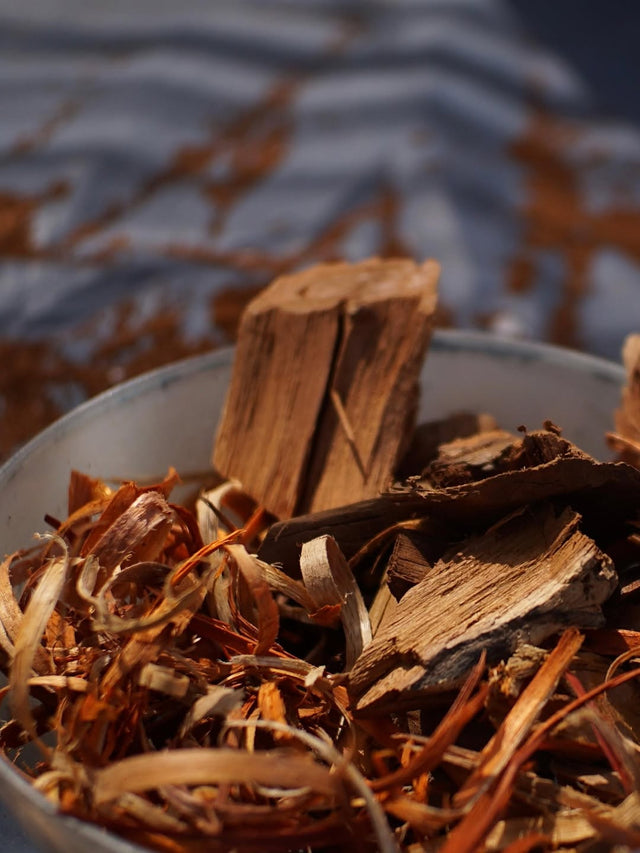
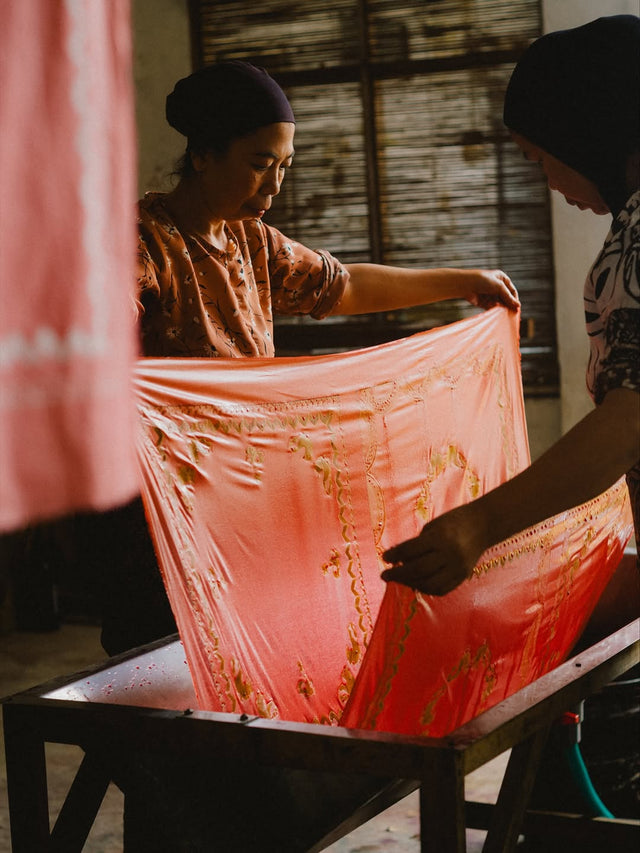
Long before industrial production, leaves, bark, roots, and wood were gathered with an awareness of place. Dyeing was not merely a technical act, but a sacred relationship with water and earth. This process required time, patience, and a deep respect for natural limits.
Relearning these ways reminds us that circularity is not a new invention. It is an ancestral way of thinking that asks us to see materials not as isolated resources, but as part of a living cycle. By embracing these values, we open the possibility for developing materials that are more respectful of the world we share.
The Wisdom of Plant Based Dyes
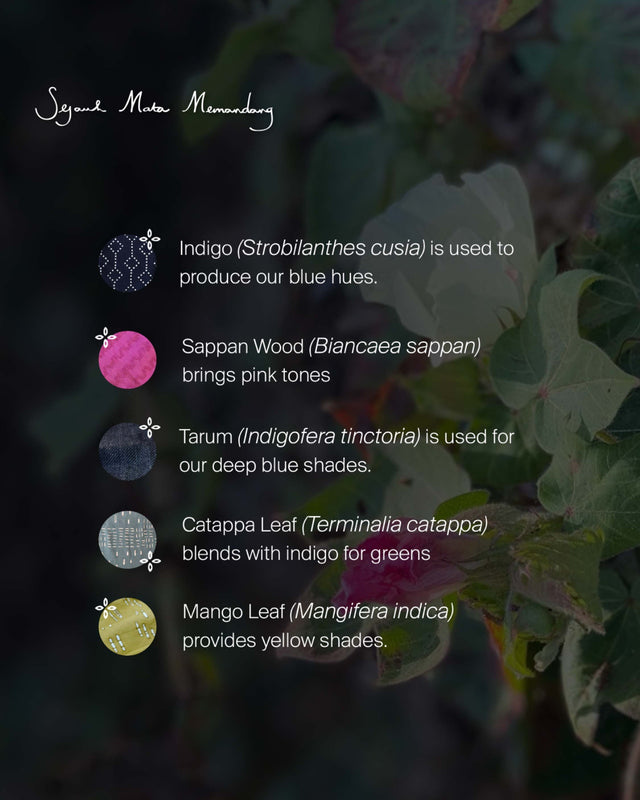
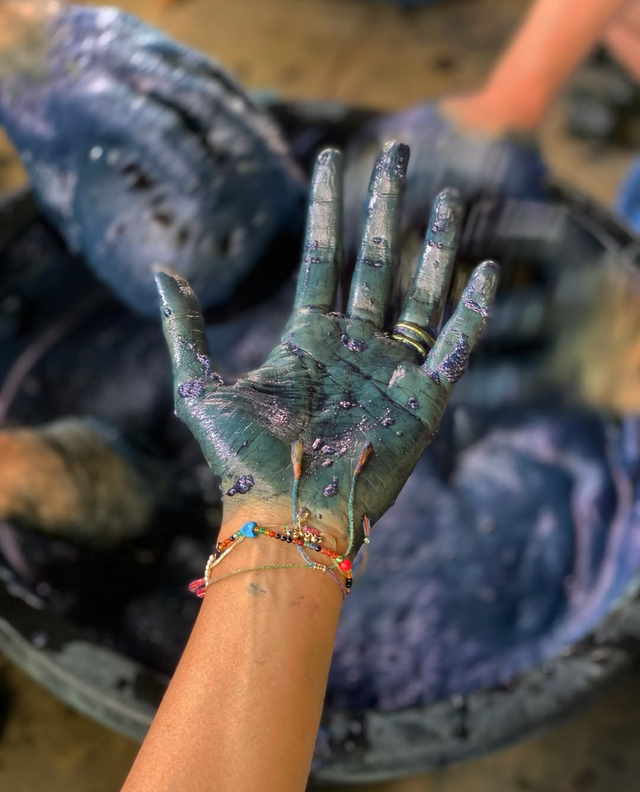
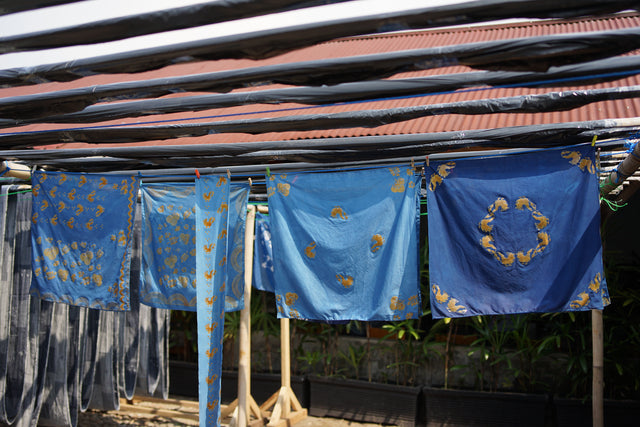
The principle is simple: materials come from nature and ideally return to the earth without leaving a negative impact. At Sejauh Mata Memandang, we use various plants to create our colors:
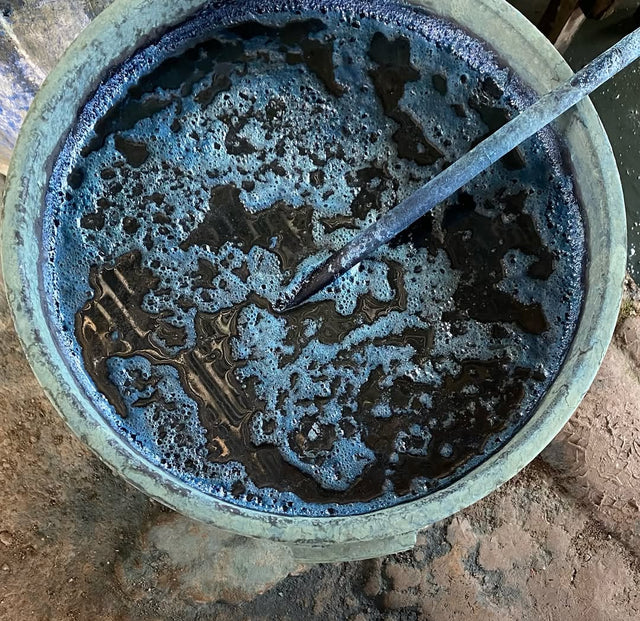
In the dyeing process, we also prioritize plant-based binders and auxiliaries. For Strobilanthes cusia, the reduction process uses a cassava sugar-based reducer. For Biancaea sappan, we apply a candlenut-based mordant to help fix the color. By choosing plant-based materials, we remain mindful of the water and ecosystems that receive what we release.
Honesty in Every Shade
We recognize that nature has its limits. For shades that nature cannot provide, we use certified OEKO-TEX synthetics that are kept minimal and tested safe for our water and your skin. Being responsible means being honest about our process; these colorants are selected to ensure they do not pollute the environment while allowing us to create pieces that Sahabat Sejauh can cherish for a long time. This balance allows us to maintain a responsible production system without compromising the health of our planet.
Journey of Circularity
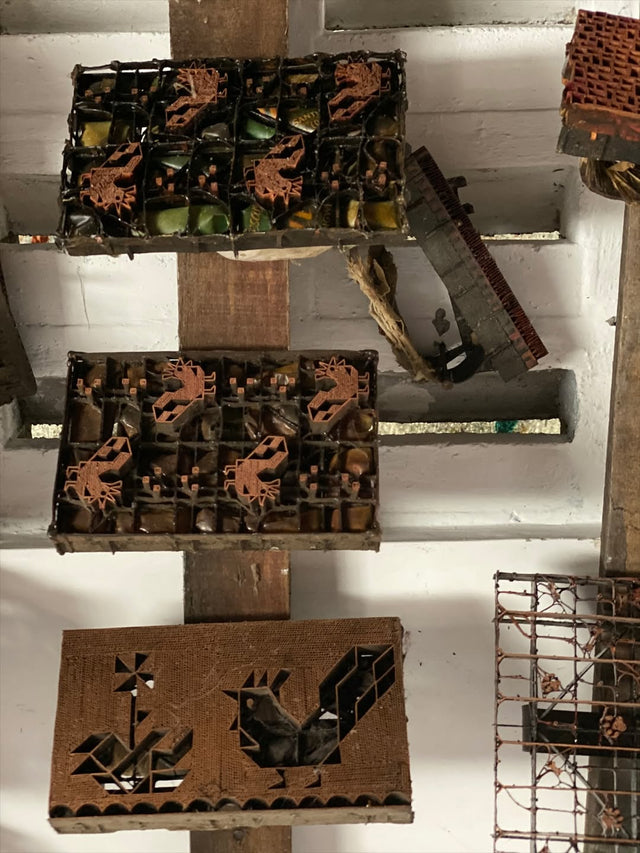
The circular fashion practices we adopt are not instant. Sejauh Mata Memandang began studying circularity through our various exhibitions and initiatives. Over time, we have come to understand that circularity involves more than just repurposing waste into new products. It demands a holistic perspective, starting from material selection and production to the habits of use and care. To act as part of the solution, we must choose materials and processes with greater awareness.
Nurturing Honest Relationships
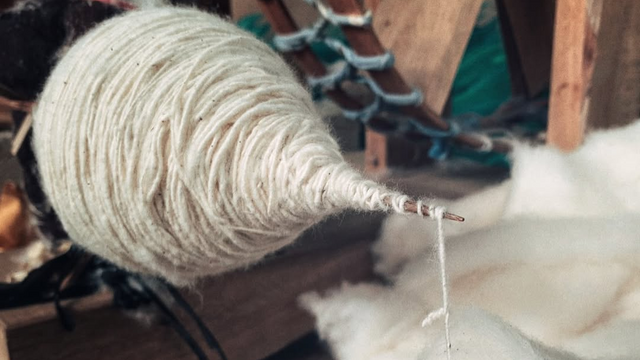
In practicing circular fashion, our efforts focus on restoring and caring for what we have taken from the earth. We achieve this by choosing natural materials grown and processed responsibly alongside our Keluarga Sejauh at Studio Sejauh. Partners such as Shibiru, Pagi Motley, and Craft Denim consistently use plant-based dyes. This approach builds production systems that are more open and honest. Through transparency, Sahabat Sejauh can know who made their clothes, what materials were used, and how the process took place.
A Life Cycle to be Reimagined
Ultimately, circular fashion invites us to view garments not as disposable goods, but as part of a life cycle to be cared for, worn longer, and reimagined. For us, it means understanding the journey of a garment from beginning to end: from the materials selected to how it is used. We continue to learn and undergo this process step by step, aware that every decision, no matter how small, plays a role in maintaining the health of this cycle.
Every day is Earth Day.