
How to Care for Natural Fiber Garments So They Last Longer
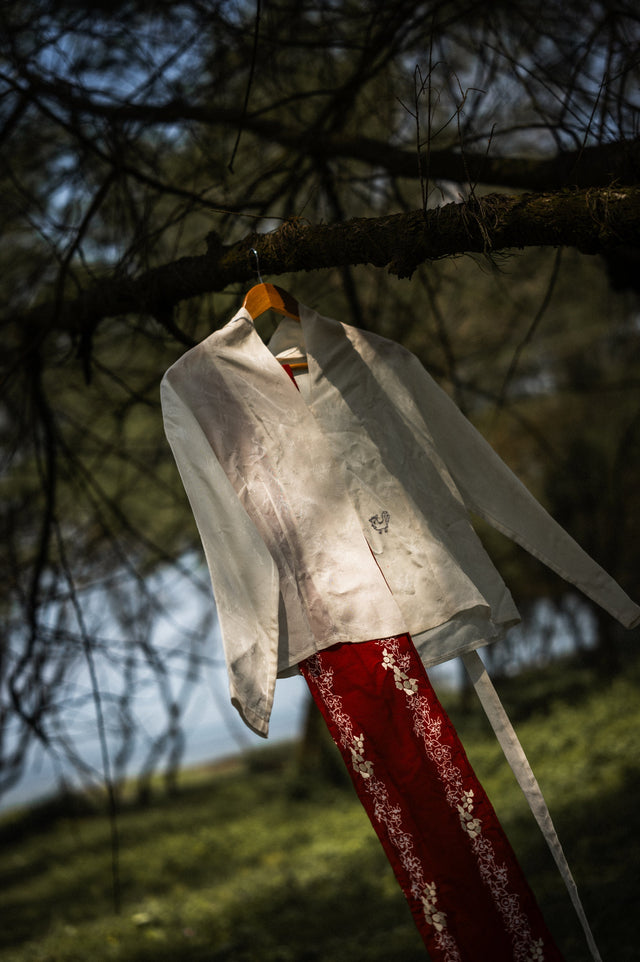
A garment's story does not end when it leaves the loom. In many ways, that is where the next chapter begins: in the hands of the person who wears it, washes it, hangs it to dry, and decides whether to keep it for another season.
Research from the Oslo-based group SIFO found that up to 75% of a garment's greenhouse gas footprint occurs not during production, but during its life in our wardrobes. How long we keep something, how often we wear it, and how we wash it matter more than most of us realize. This places something real and manageable in our hands.
Why Natural Fibers Respond Differently

Natural fibers like cotton, linen, ramie, and TENCEL™ behave differently from synthetics in ways that make care both simpler and more forgiving. They breathe. They release what they absorb. Given air and time, they tend to restore themselves.
Synthetic materials like polyester work differently. Their hydrophobic structure attracts and holds onto oil-based residues, which means odors and stains become more persistent over time. Research has shown that polyester retains odor-causing bacteria even after washing, particularly strains that thrive on sweat and body oils. Repeated washing with heat does not always resolve this and can fix residues deeper into the fabric rather than removing them.
The Ellen MacArthur Foundation has noted that many garments are discarded not because they are worn out, but because they no longer feel fresh. For natural fibers, this is far less likely to be the case. The material itself is on your side.
Wash Less, and Ask First

The most restorative thing you can do for a natural fiber piece is also the simplest: wash it less. Every wash cycle degrades fiber over time. The longer the interval between washes, the longer the textile holds its strength and shape.
Before putting something in the washing machine, pause and ask whether it is truly necessary. In our climate, where heat and humidity are constant, it is easy to reach for the machine out of habit rather than necessity. A piece worn for a few hours with no visible marks may need nothing more than airing out.
At Sejauh Mata Memandang, every piece carries a care label that tells you exactly what the fabric needs. These labels are part of our commitment to transparency, a small bridge between how something was made and how it can be kept.
Spot, Air, Then Wash
For minor marks, spot-treating is almost always preferable to a full machine wash. A little cool water and gentle attention to the affected area extends the life of the fabric far more than putting the whole piece through a cycle.
In a tropical climate, natural fibers benefit greatly from being aired regularly. Hung in a shaded, well-ventilated space, moving air lifts odors and releases humidity absorbed during wear. This works particularly well after a long day. Direct sunlight, while tempting in our climate, can fade natural dyes and weaken fiber over time, so shade is always the better choice.
When a wash does become necessary, using the gentle cycle with cold water is the right approach. Indonesian tap water is already close to ambient temperature, which means cold washing requires no extra energy and is gentler on fiber. Washing full loads makes the most of each cycle.
Dry in the Shade

Air drying is always preferable to machine drying. In Indonesia's climate, clothes dry quickly in the open air, making a dryer rarely necessary. A shaded spot with good airflow is ideal: it preserves the cloth, protects natural dyes from fading, and uses no energy at all.
If a dryer is used, choosing the lowest heat setting reduces stress on the fiber. But in most cases, the open air does the work better and more gently.
Keeping the Circle Moving

At Sejauh Mata Memandang, we believe clothing is meant to be used, cared for, and passed on. Reuse, repair, rewear, and recycle are not rules but daily orientations, small decisions that keep a piece in circulation rather than out of it. A piece that is repaired when it needs attention, worn regularly, and passed on rather than discarded lives a fuller, longer life.
Research on woollen garments has found that how long we keep and wear something is the single most influential factor in its environmental impact. Every time a piece is chosen from the wardrobe instead of replaced, that choice matters.
Caring for what we wear is one of the quietest and most consistent ways to participate in a circular practice. It does not require a large gesture. It asks only for a little attention, a little patience, and the willingness to keep something going.
Every day is Earth Day.



0 Comments
There are no comments for this article. Be the first one to leave a message!